
Google Calendar
Cycle tracking built into your everyday calendar — so you can be prepared
ROLE
Sole UX/UI Designer
TIMELINE
7 weeks
TOOLS
figma, figjam, zoom
THE PROBLEM
People who menstruate often switch between multiple apps to manage their schedules and track their cycles. Existing period apps rarely integrate with the tools users already rely on.
There are also different comfort levels around tracking — some users want detailed insights and predictions, while others prioritize privacy and simplicity.
THE SOLUTION
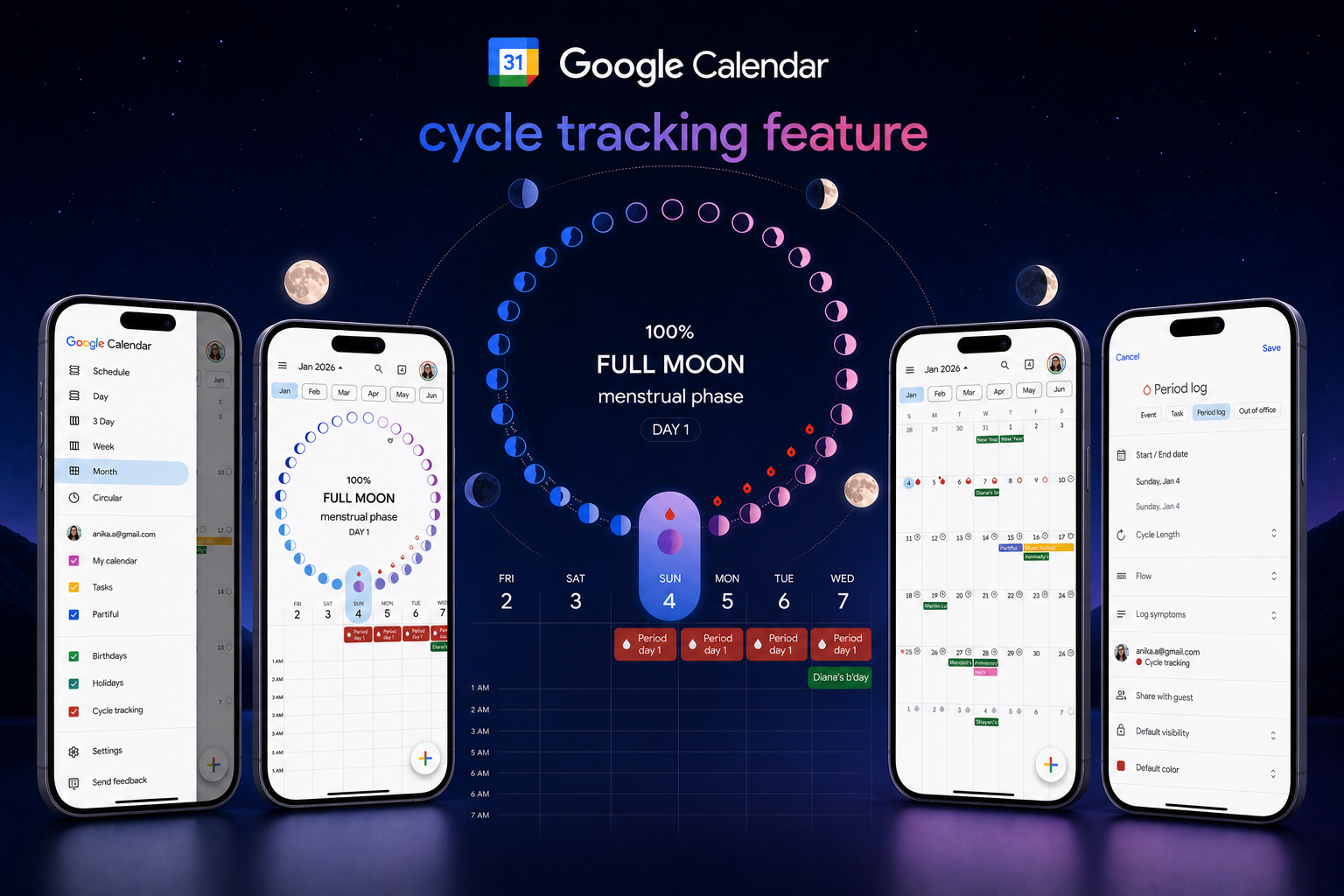
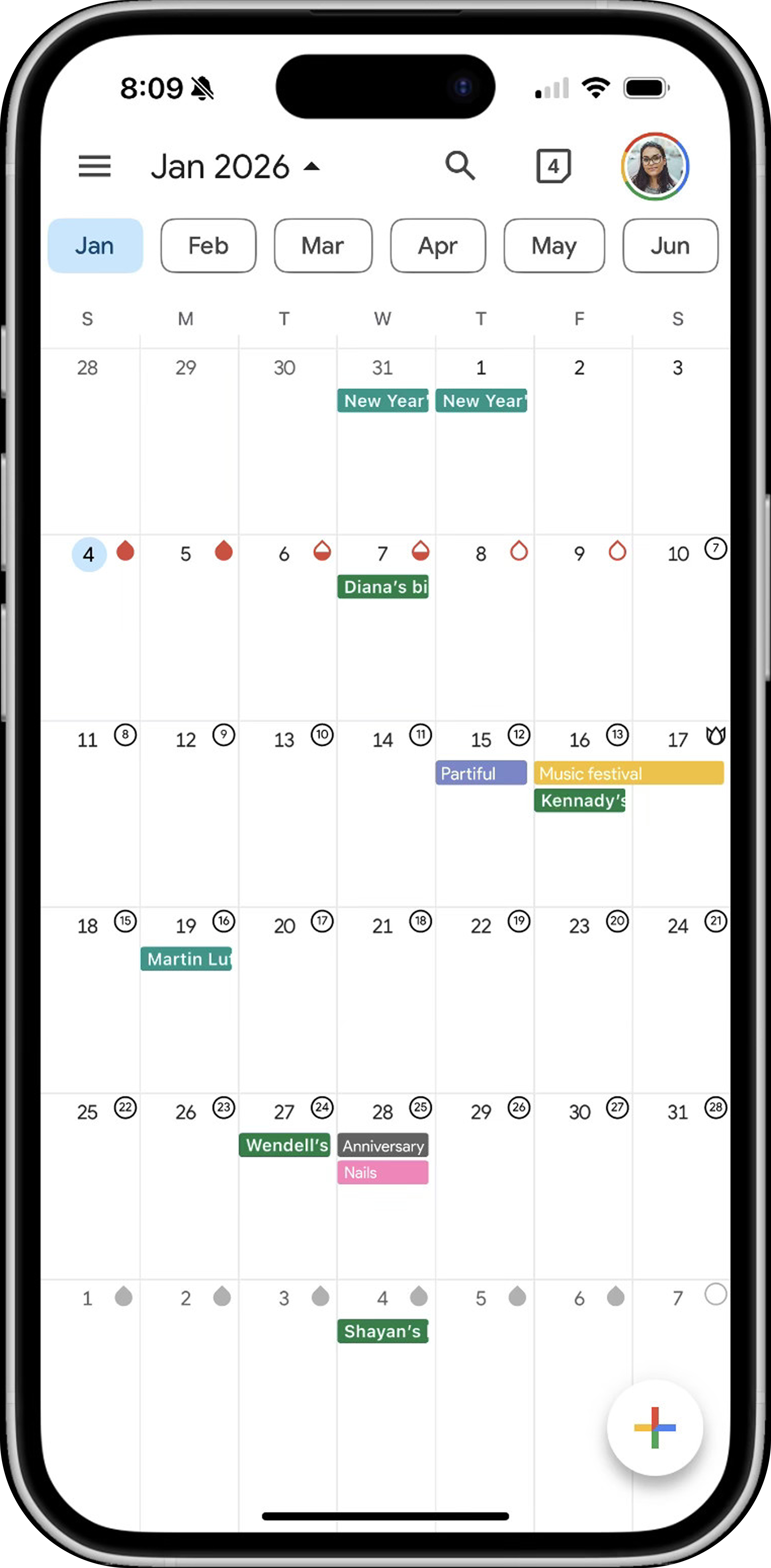
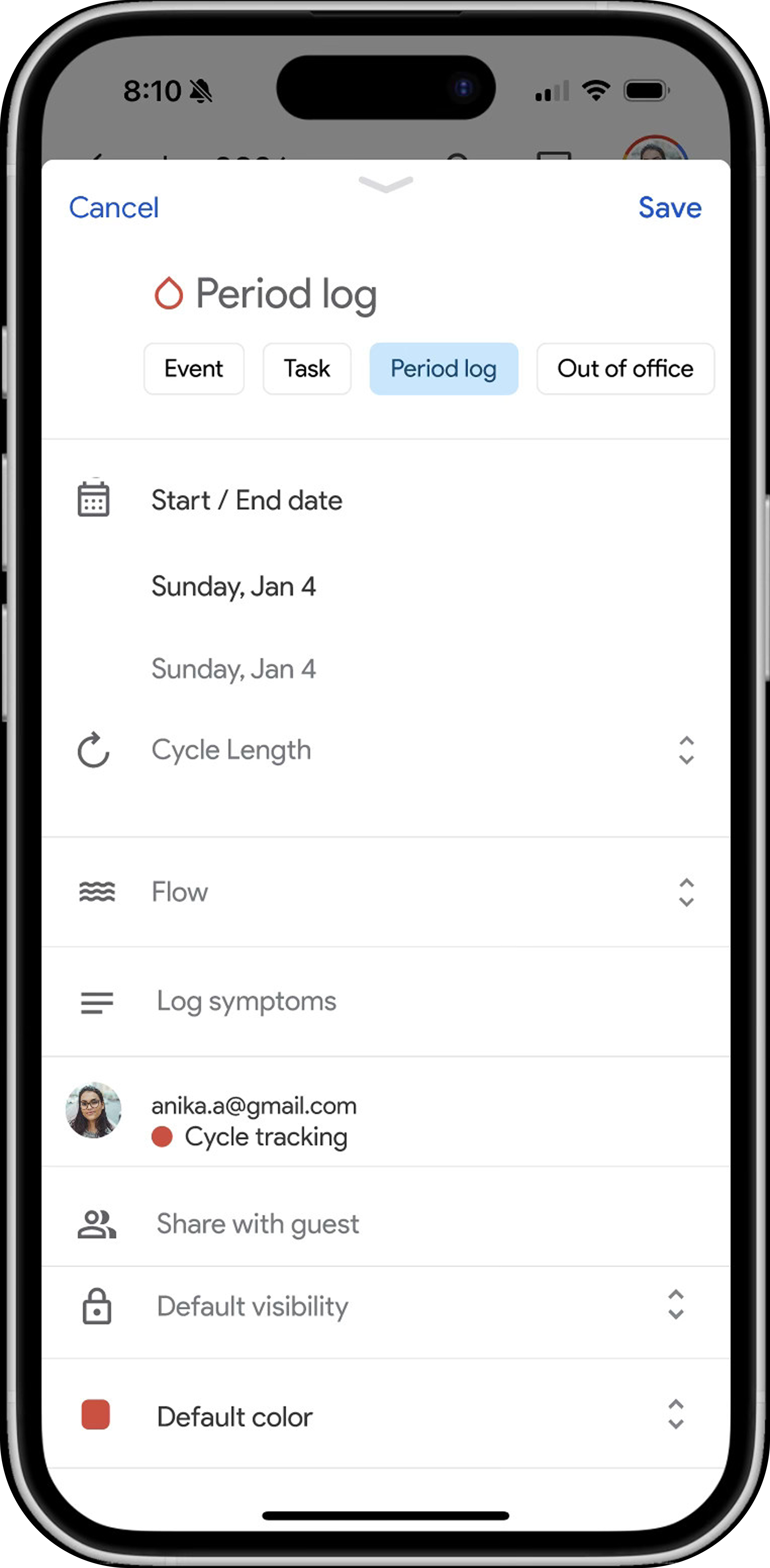
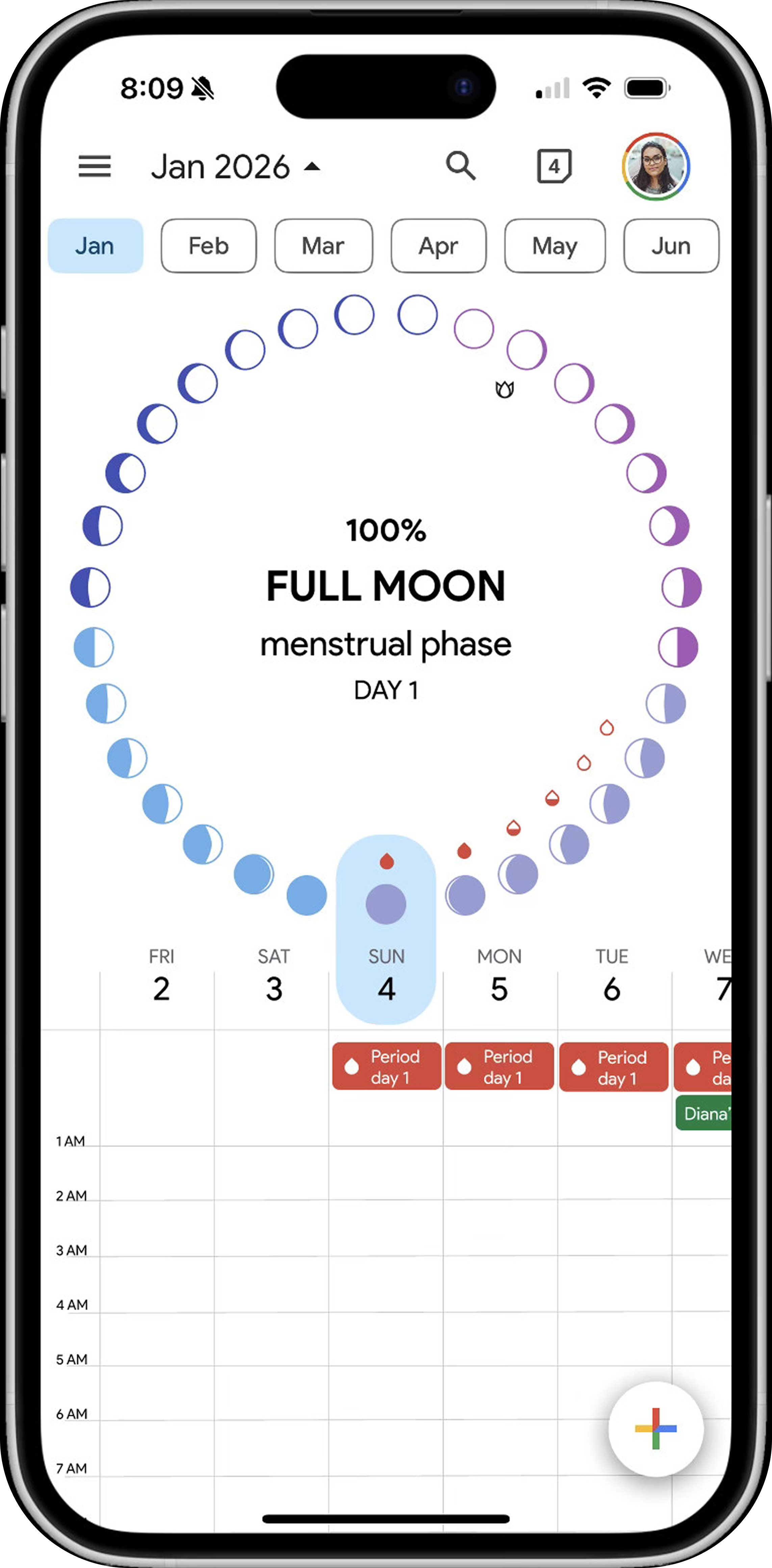
designed a cycle tracking feature for Google Calendar that allows users to either manually log cycle information or sync data from an existing period tracking app directly into their calendar.
The goal was to create a more connected planning experience that helps users prepare for their lives more holistically.
OVERVIEW
Google Calendar helps users organize work, social events, and daily routines, but menstrual cycle tracking often exists separately in standalone apps. This creates a disconnect between personal health information and everyday planning.
I explored how cycle tracking could be integrated directly into Google Calendar in a way that felt private, flexible, and seamlessly embedded into existing user behaviors.



research
GOALS
Understand current cycle tracking behaviors and every day scheduling habits
Explore emotional needs surrounding privacy, stigma, and trust
Identify importance of specific features like reminders, predictions, and symptom tracking
Measure trust and comfort levels around sharing reproductive health data with Google
COMPETITIVE ANALYSIS
Since menstrual tracking tools and scheduling tools often exist separately, I analyzed both Apple Calendar and leading cycle tracking apps to explore how a more integrated, everyday experience could reduce friction and improve consistency in tracking habits.

STRENGTHS
Strong cycle prediction and symptom tracking features
High user engagement through educational tips, personalization, and reminders
Privacy controls and data syncing increase convenience
Established brand trust and large user bases
WEAKNESSES
Many apps separate health tracking from daily scheduling of events and workflows
Privacy and sensitive data concerns reduce user trust
Subscription paywalls limit use of key features — not accessible to all
Prediction accuracy isn’t always consistent with irregular cycles
OPPORTUNITIES
Integrate cycle tracking directly into everyday calendar behavior
Create a more seamless and less stigmatized experience
Offer customizable privacy and sharing controls
Combine wellness focused design with practical scheduling tools
USER INTERVIEWS
interviewed 6 participants between the ages of 28–50 across the U.S. to better understand current cycle tracking behaviors, emotional needs, privacy concerns, and attitudes toward integrating menstrual tracking into Google Calendar. Participants had a range of reproductive experiences, including pregnancy prevention, pregnancy, and menopause.

“If I track my cycle on Google calendar, who else can see it?KEY INSIGHTS
Accuracy
Most important factor when choosing a tracking tool
More than just logging periods
Users also like tracking mood, symptoms, fertility, and body awareness
Major theme: privacy concerns
Especially around large tech companies handling reproductive health data
Google Calendar integration
Some users thought it can be convenient, but worried about blending health data into work spaces

“I don’t know if I trust Google with my body data”DESIGN OPPORTUNITIES
Create a seamless all-in-one experience that combines scheduling and cycle tracking
Prioritize transparent privacy controls and customizable visibility settings
Use supportive and emotionally aware design language instead of clinical interfaces
Offer optional integrations with existing period apps and visual calendar cues
Allow users to customize how integrated or separated cycle data feels within their calendar experience
define

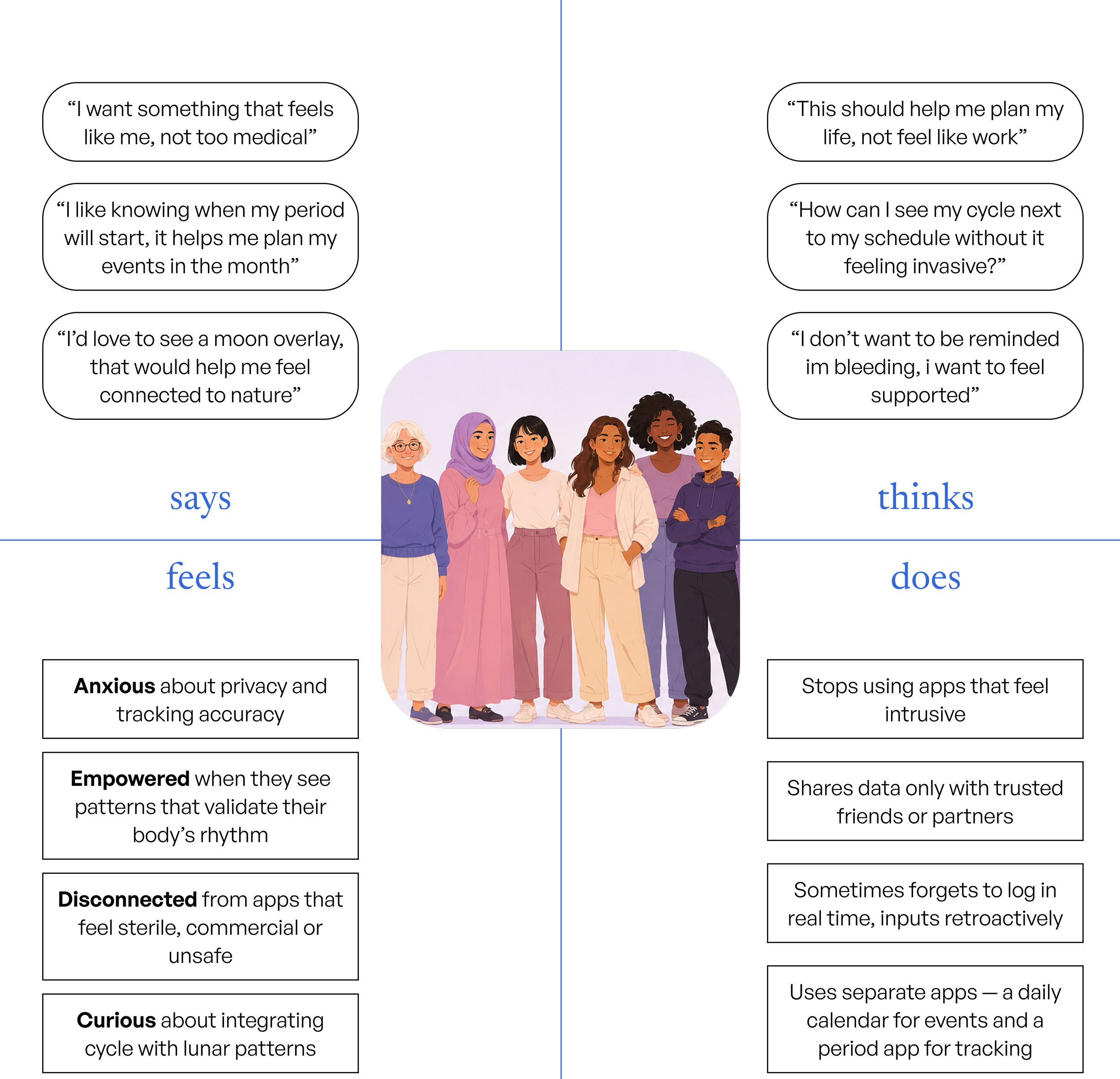
EMPATHY MAP
I created an empathy map to not only understand functional needs, but also the emotional realities surrounding cycle tracking, privacy, stigma, and self awareness.
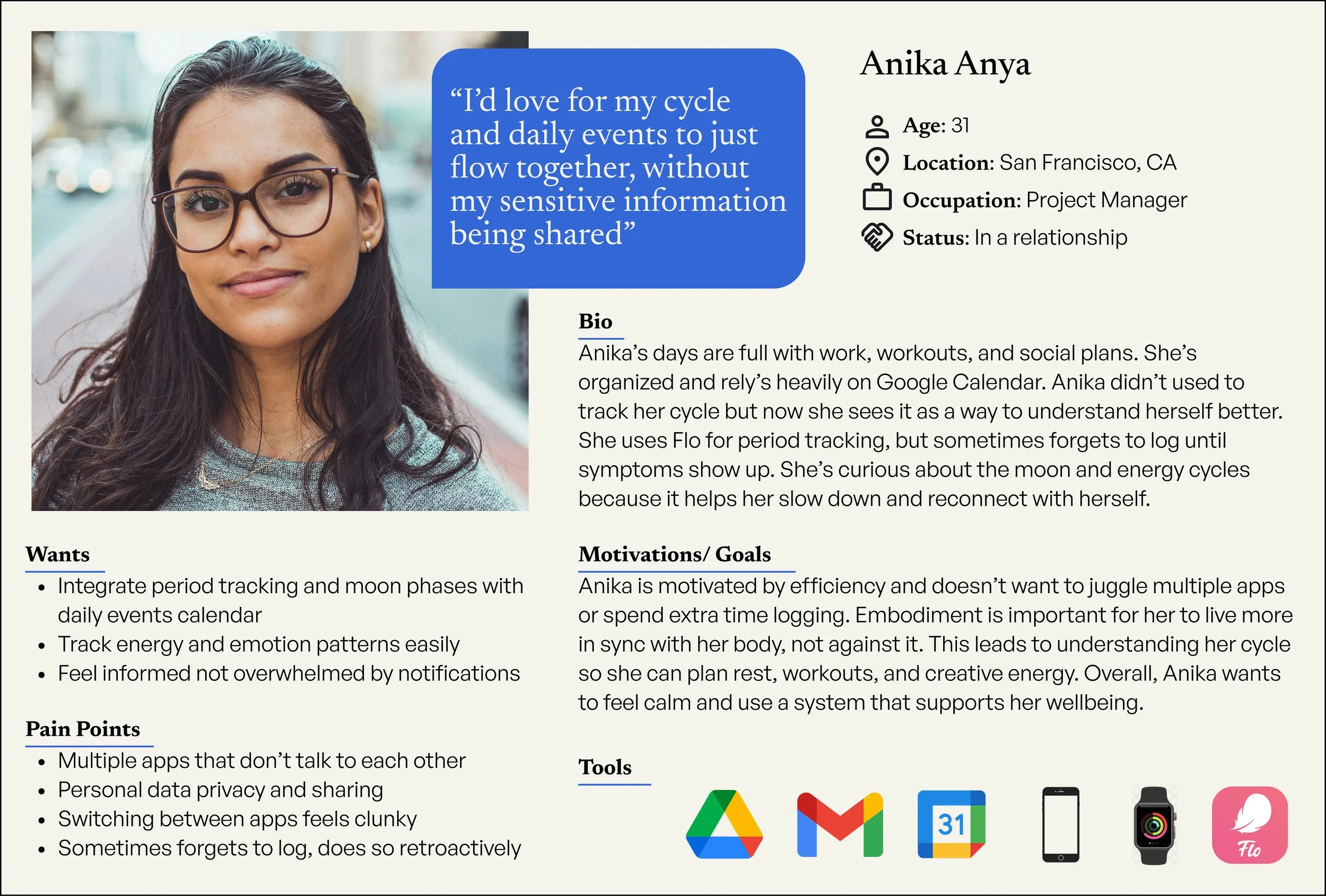
USER PERSONA
I created this persona to represent users who already rely on digital calendars to manage their daily lives, but still experience fragmentation when tracking reproductive health separately. Anika reflects the tension many participants expressed between wanting convenience and integration, while also needing privacy and control over sensitive data.

How might we seamlessly integrate cycle tracking into users’ daily planning routines while maintaining trust and privacy?
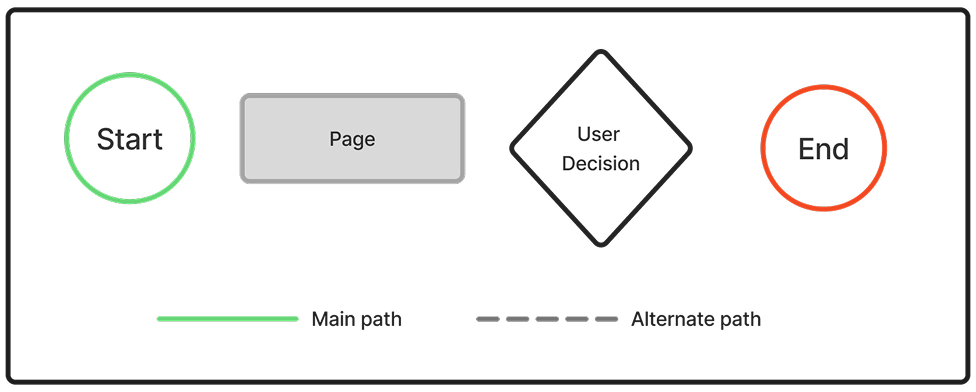
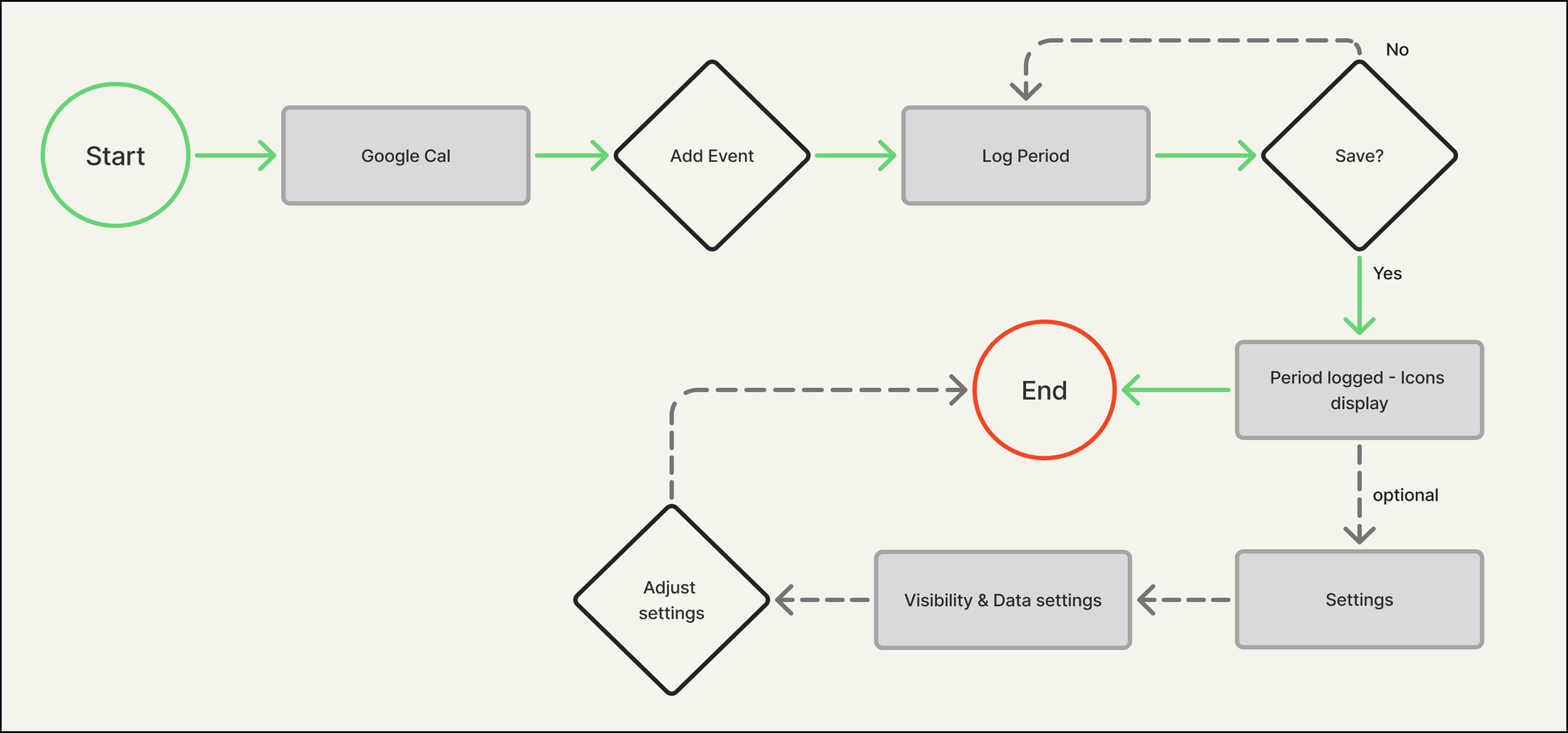
USER FLOWS
To address varying needs, I designed flows that support both manual cycle tracking and optional third party syncing within Google Calendar. This allowed the experience to accommodate different comfort levels around privacy and health data sharing.

design

LOW FIDELITY WIREFRAMES
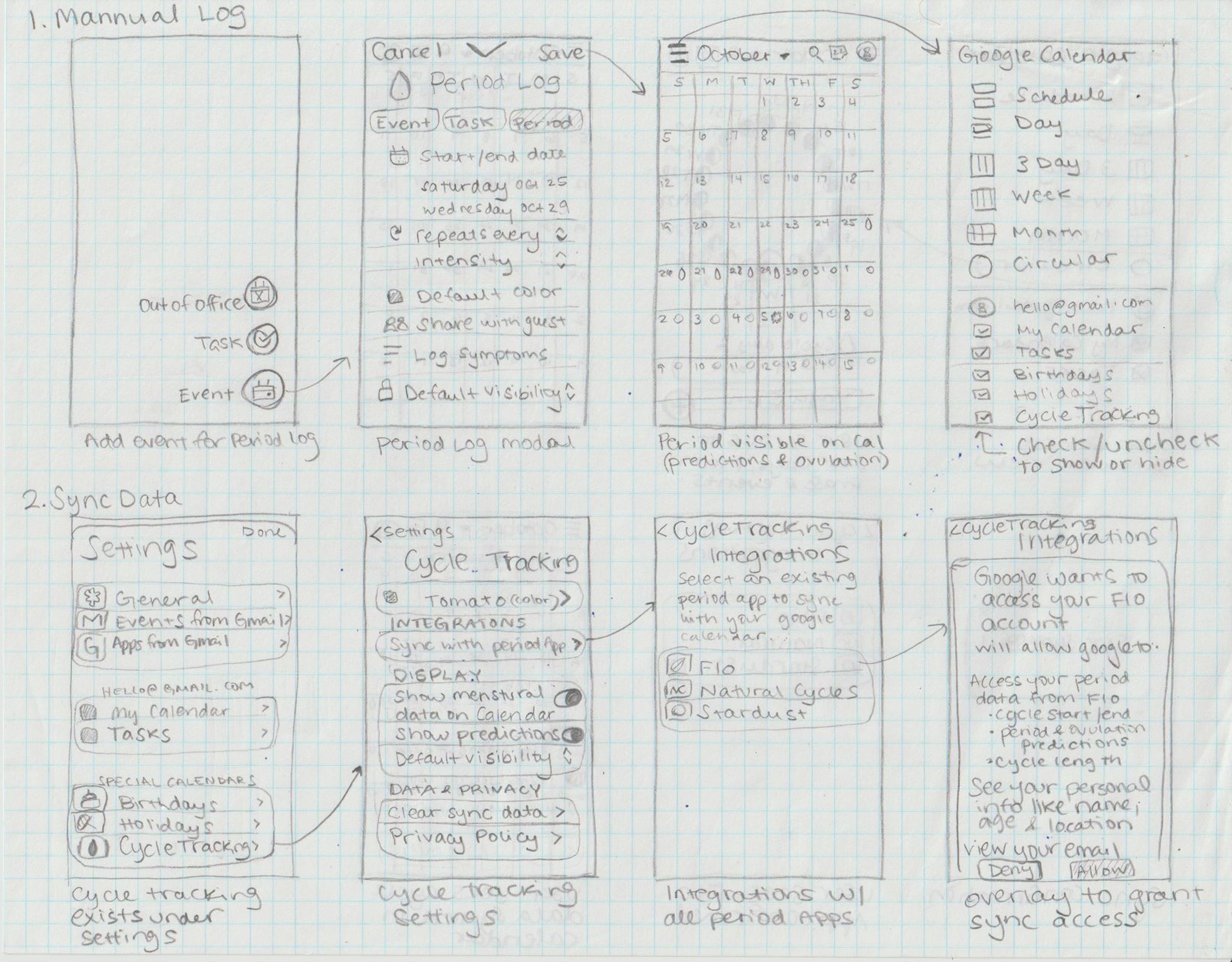
Before moving into high fidelity designs, I created and tested hand drawn low fidelity wireframes to quickly explore layout, navigation, and feature organization. Early testing helped identify usability improvements, including where third party integrations should live within settings and giving users the ability to toggle cycle visibility on or off without disabling tracking entirely.

PRIVACY CONCERNS
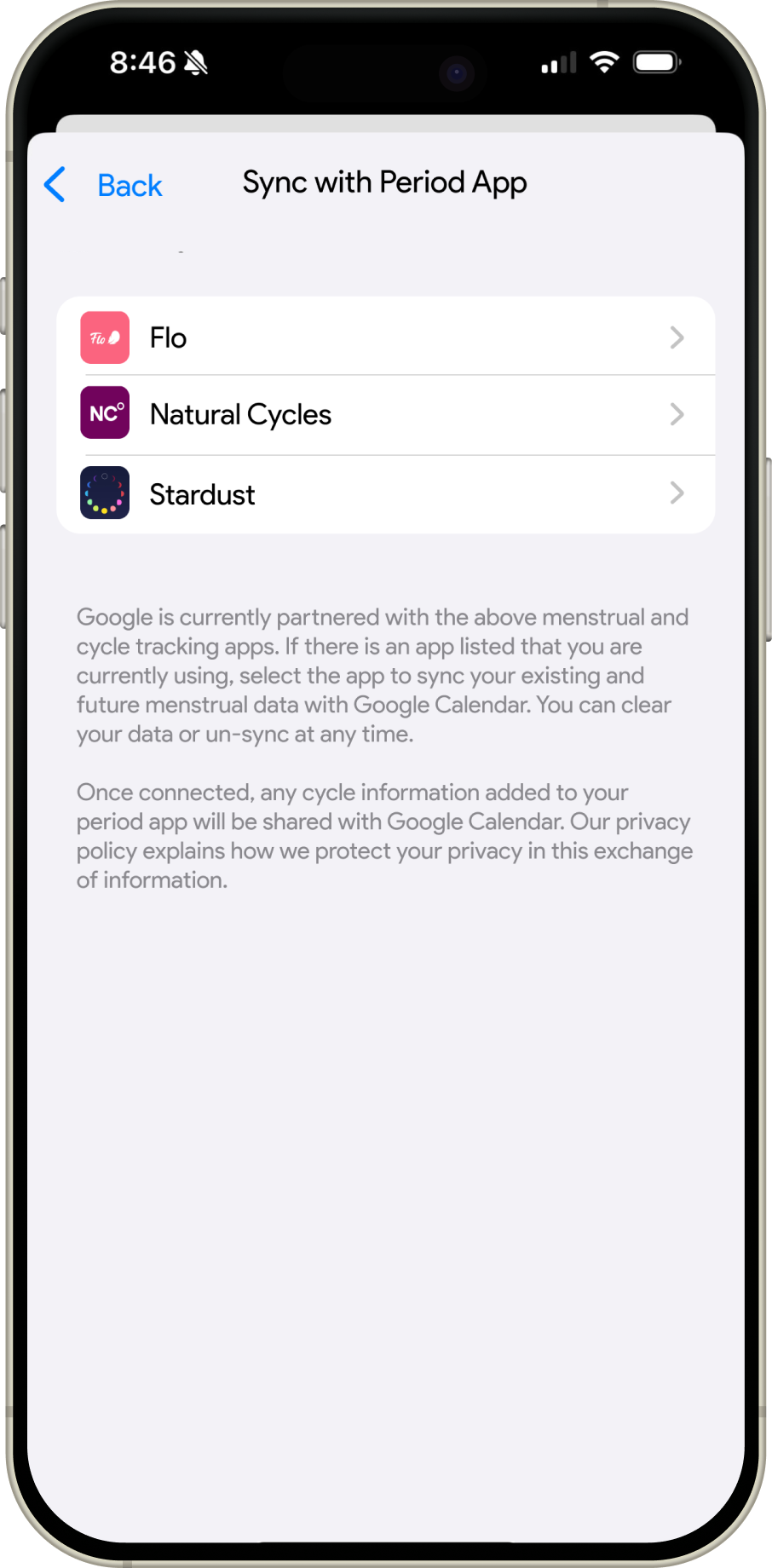
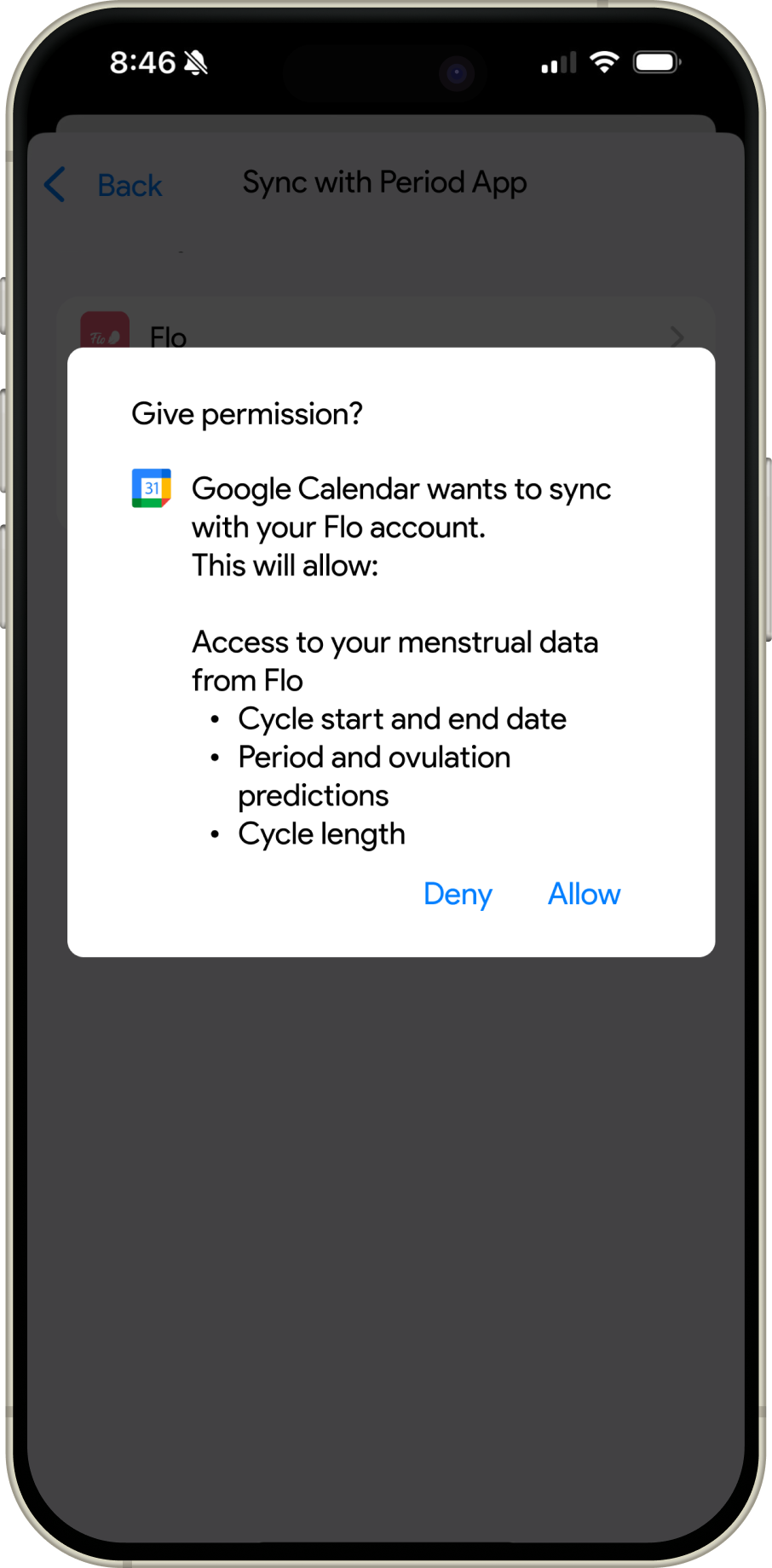
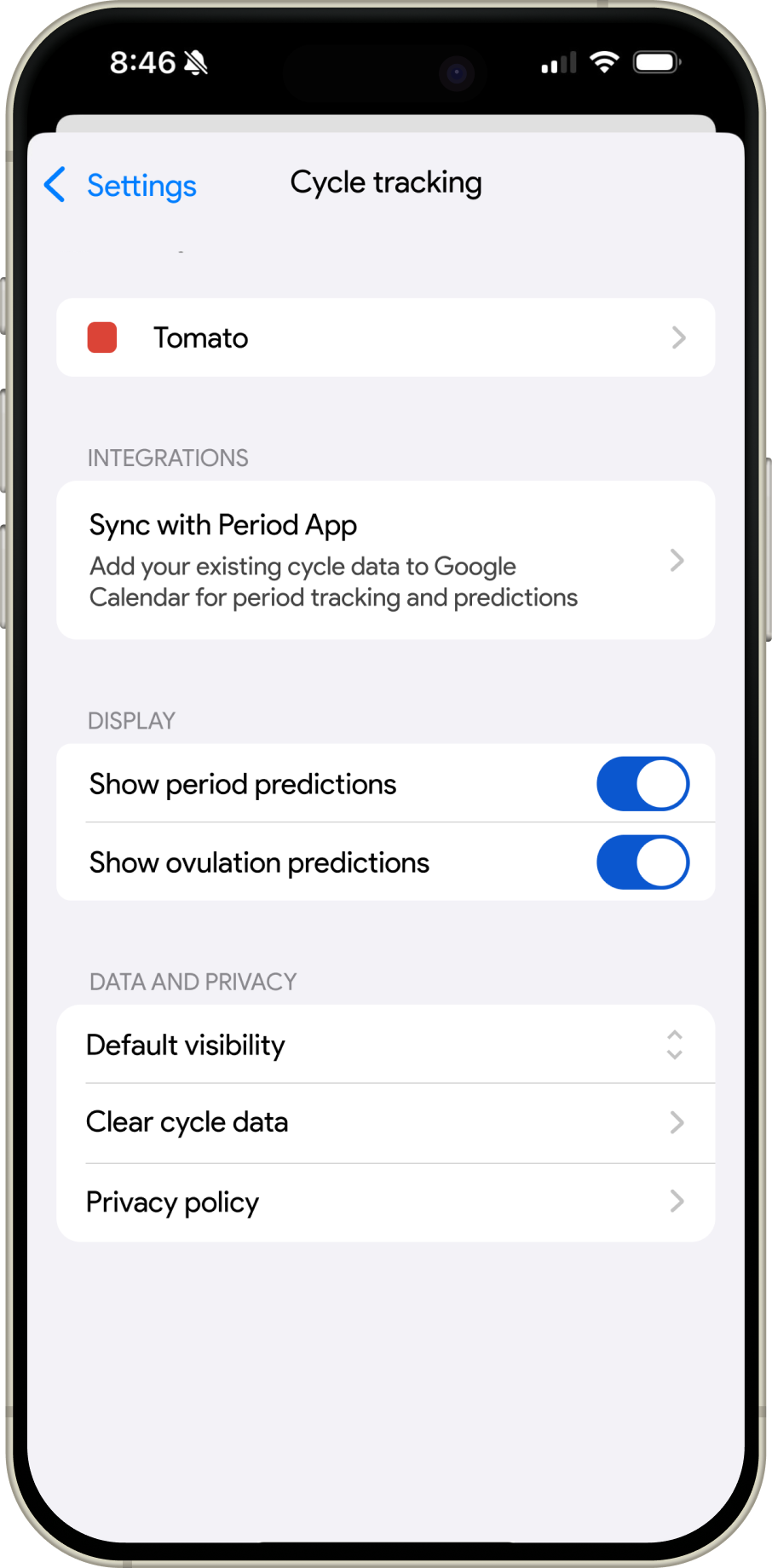
Because privacy concerns emerged consistently throughout user interviews, I designed the experience to include transparency and user control. In the below screens, the users can choose whether to sync third party apps, customize visibility settings, control predictive features, and remove cycle data at any time.
testing

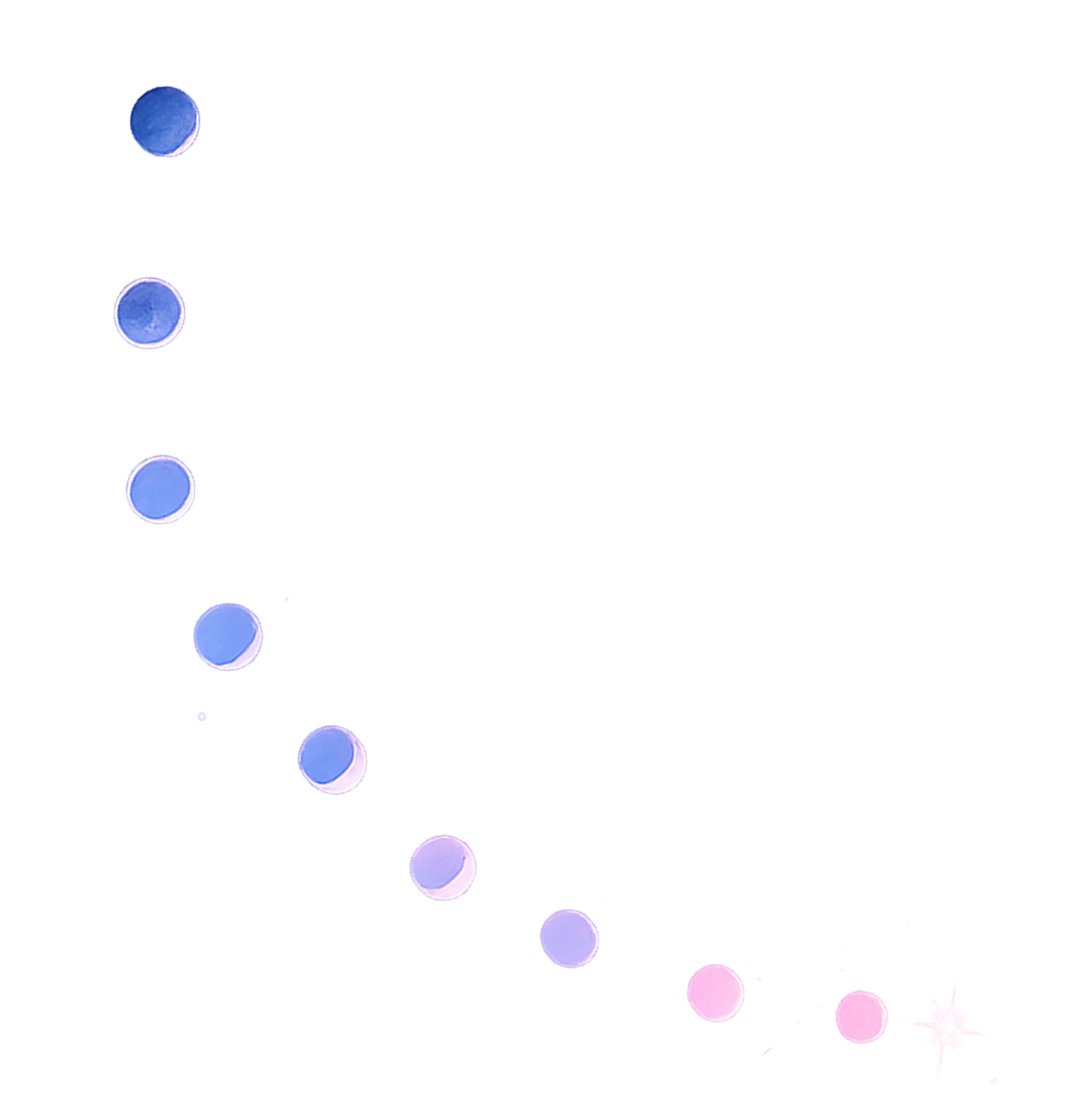
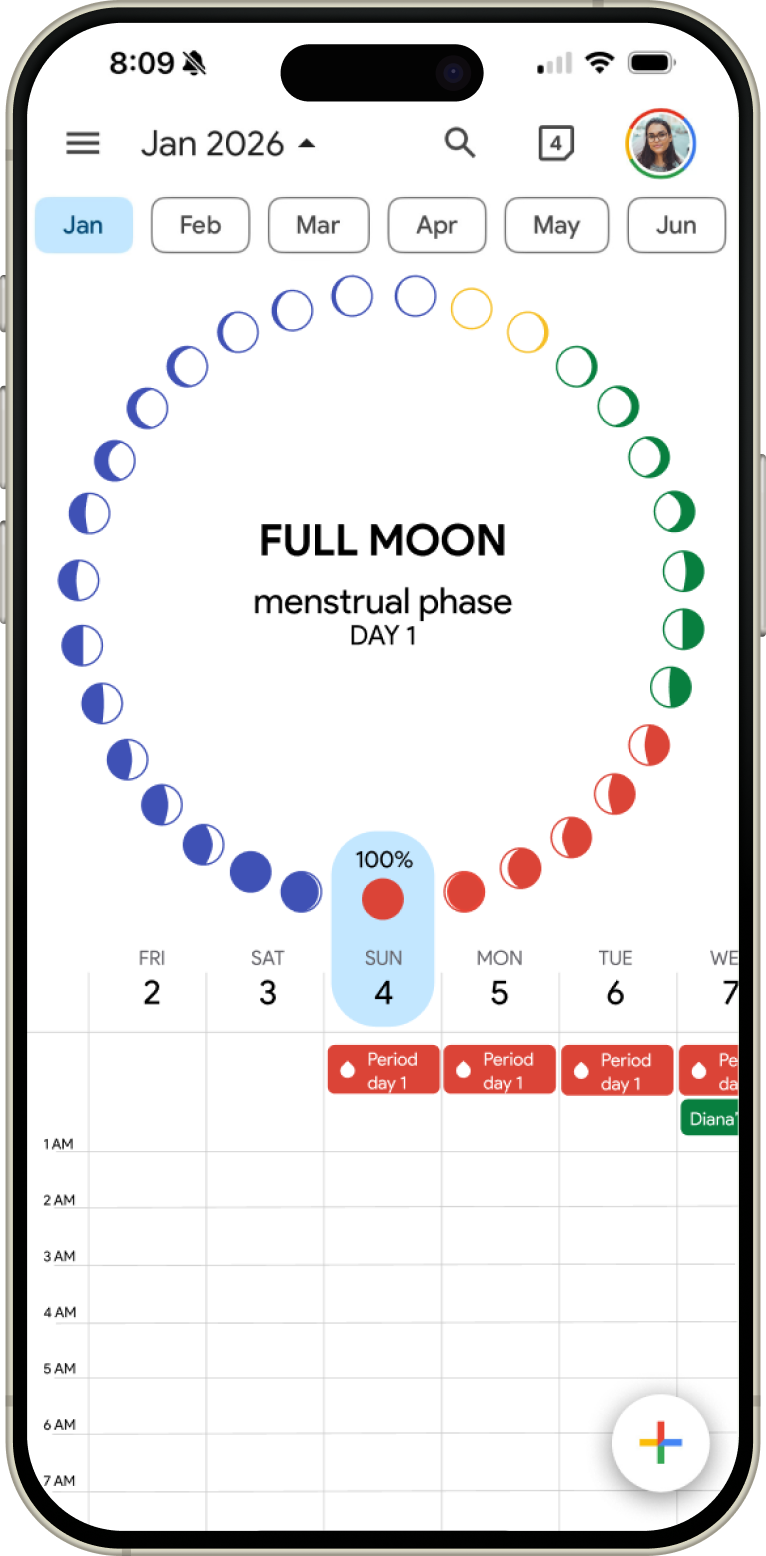
“I loved seeing the moon phases — I would definitely use circular view”
KEY FINDINGS
Over all positive response
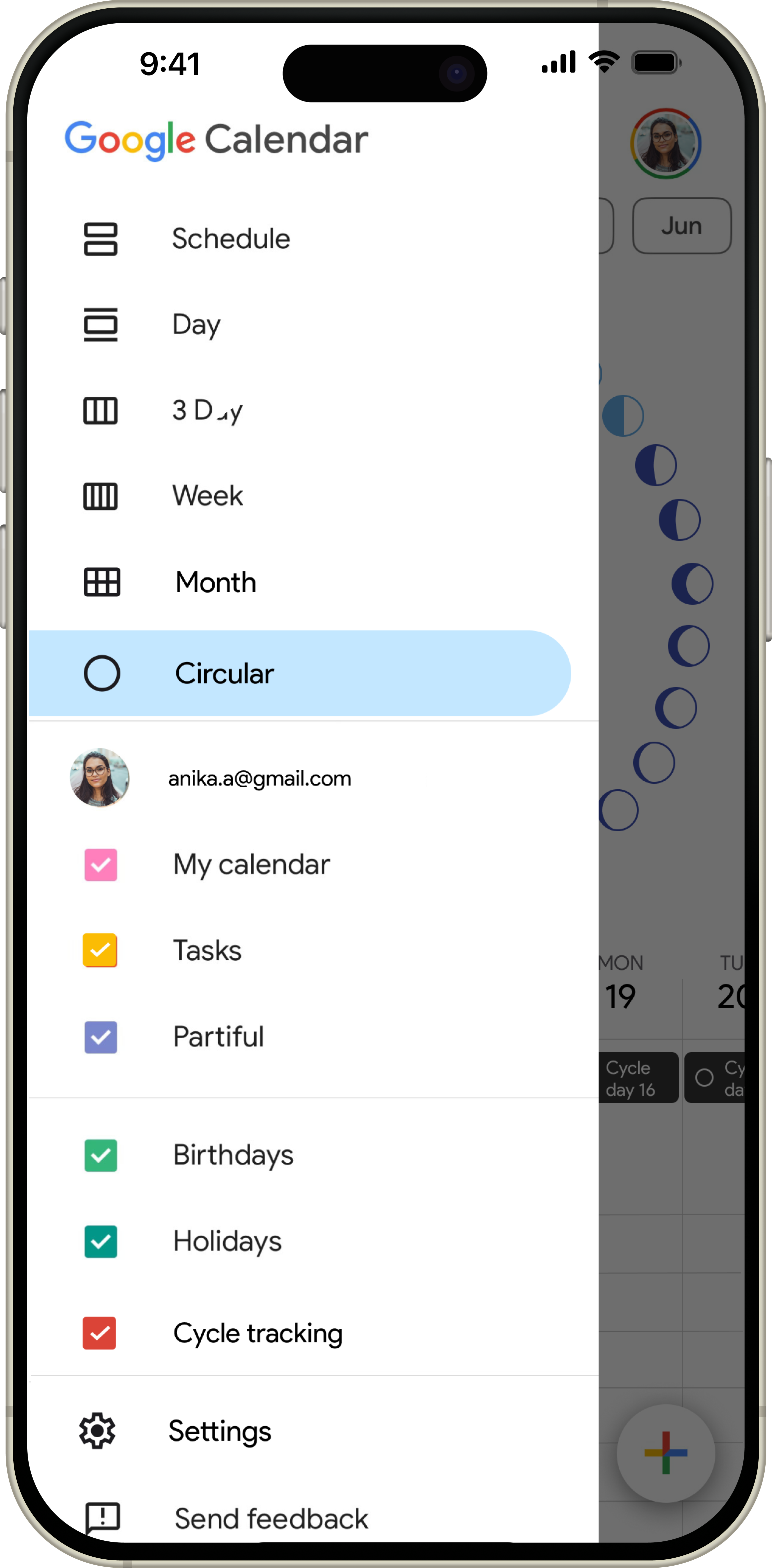
Users especially liked app syncing and the circular lunar view
Biggest usability issue
Locating the cycle tracking toggle within settings (too buried)
Terminology confusion
Several users were confused by “repeat” versus “cycle length”
Circular view feedback
Users felt the colors were too “Google” and wanted some clearer visual explanations within the circle
ITERATIONS
Moved the cycle tracking toggle higher within settings for better discoverability
Renamed “Repeat” to “Cycle Length” and added clearer contextual options
Added more flexibility for symptom tracking and ovulation customization
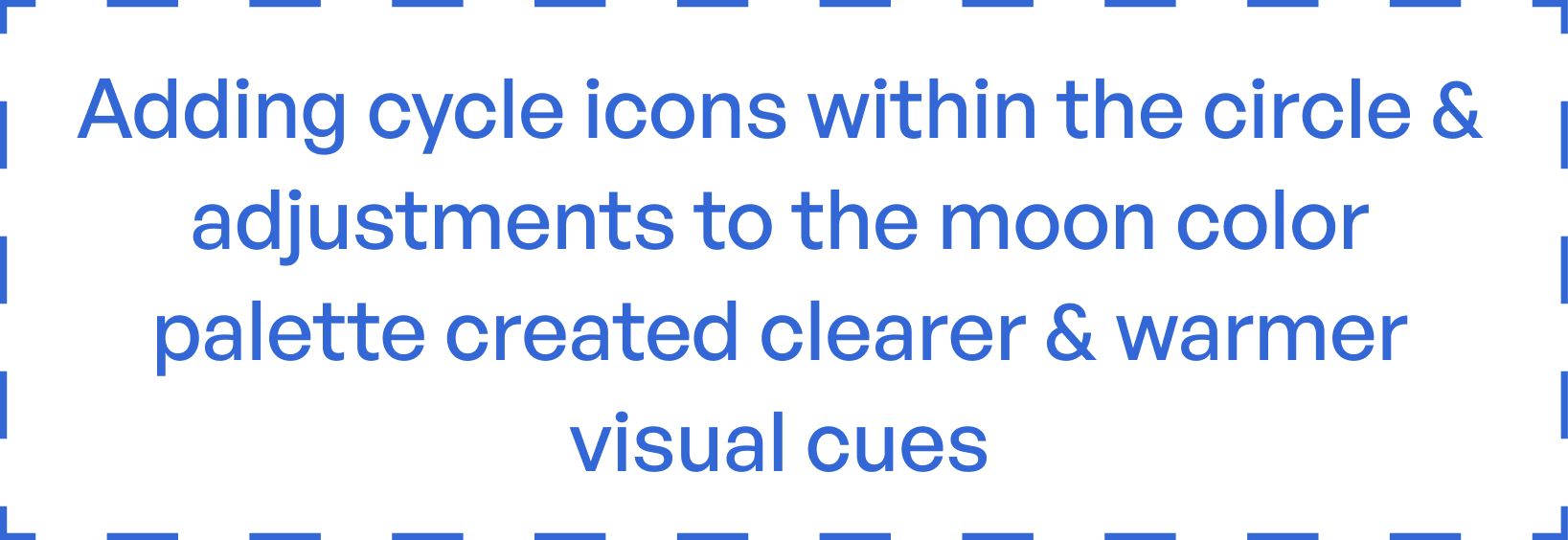
Refined the circular view by replacing color only indicators with icons and more intuitive visual cues
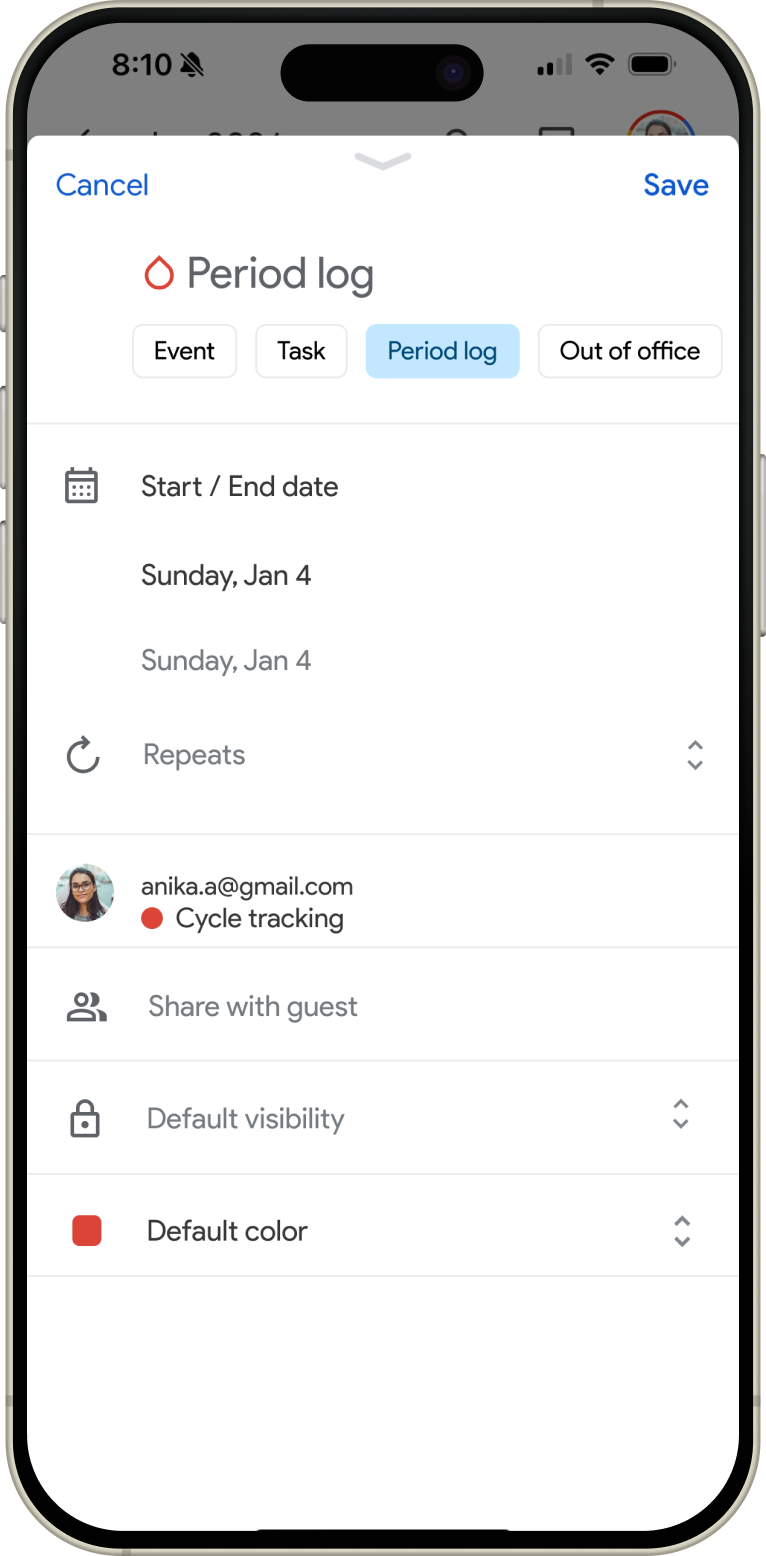
BEFORE
AFTER
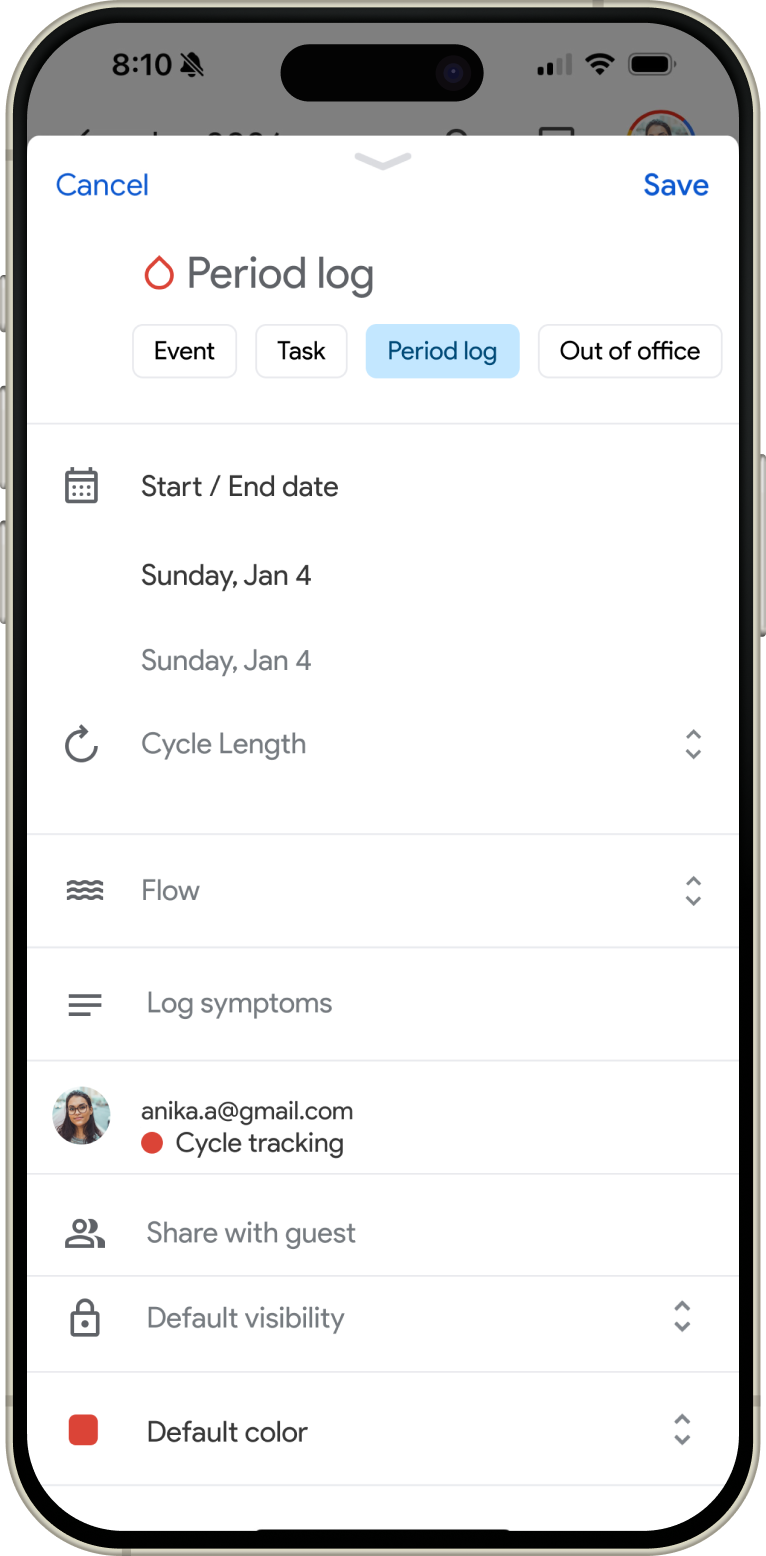
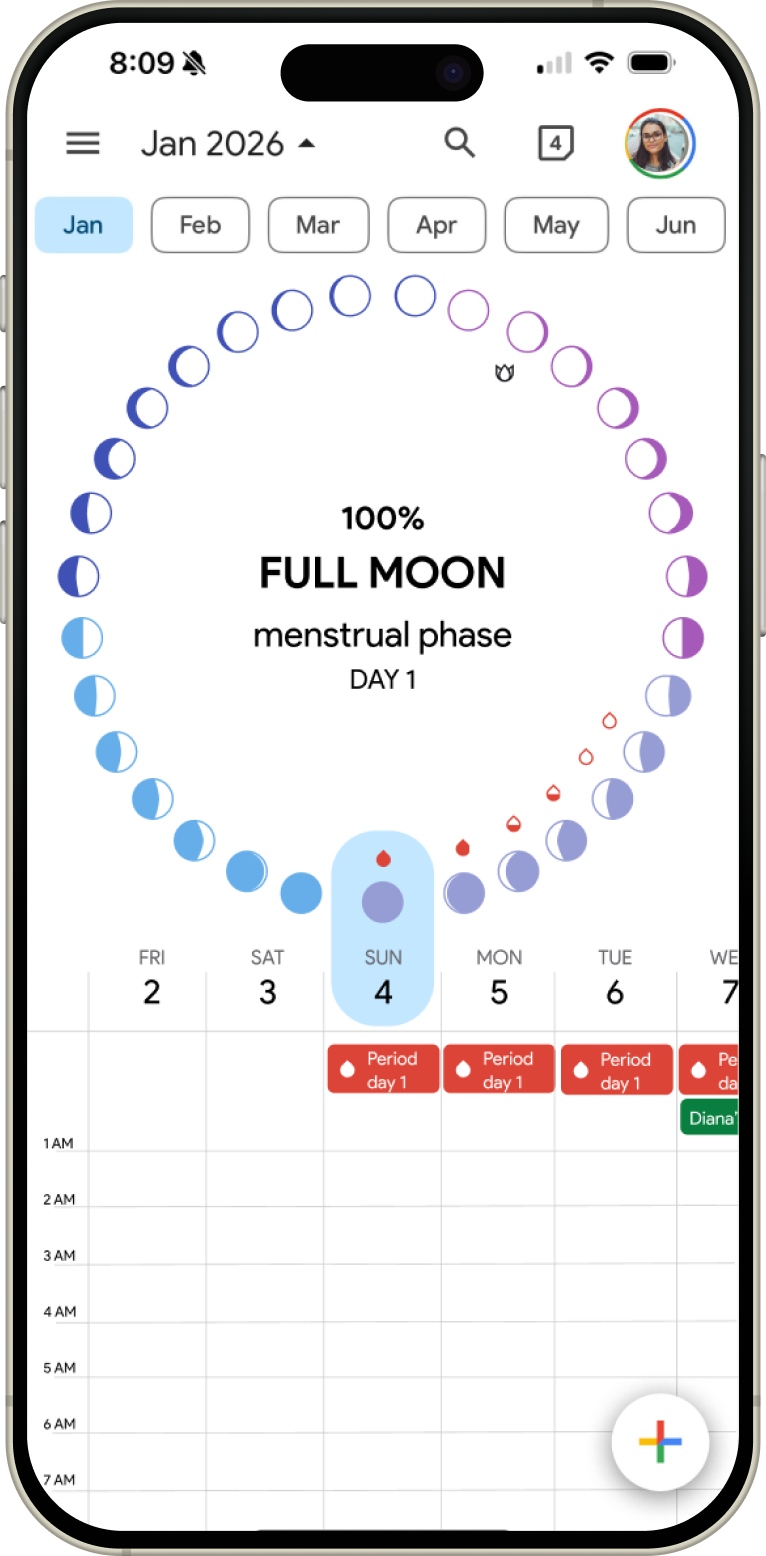
BEFORE
AFTER

the final design

takeaways

WHAT DID I LEARN?
Designing within an established product like Google Calendar required balancing innovation with consistency. I learned that introducing new features is not only about adding functionality, but also about respecting existing user behaviors and mental models. Because users already have strong expectations around how Google Calendar works, even small navigation or terminology changes had a significant impact on usability and discoverability.
WHAT WOULD I IMPROVE?
I would further explore customizable privacy settings and visibility controls to give users more flexibility over how cycle data appears across different calendar contexts. Additionally, future iterations could include onboarding guidance, tooltips, or interactive explanations, since some users needed more context around features like cycle prediction and lunar visualization.
Lastly, I would also like to continue refining the experience for users with different reproductive health experiences, identities, and accessibility needs to make the feature feel even more adaptable and inclusive.
PERSONAL REFLECTION
This project really challenged me to design for a deeply personal and sensitive experience within one of the world’s most widely used productivity tools. It pushed me to think beyond functionality and consider how trust, emotion, privacy needs, and identity influence the way people interact with digital products.
One of the most rewarding parts of this project was exploring how technology can support people in feeling more connected to themselves rather than simply being “more productive”.